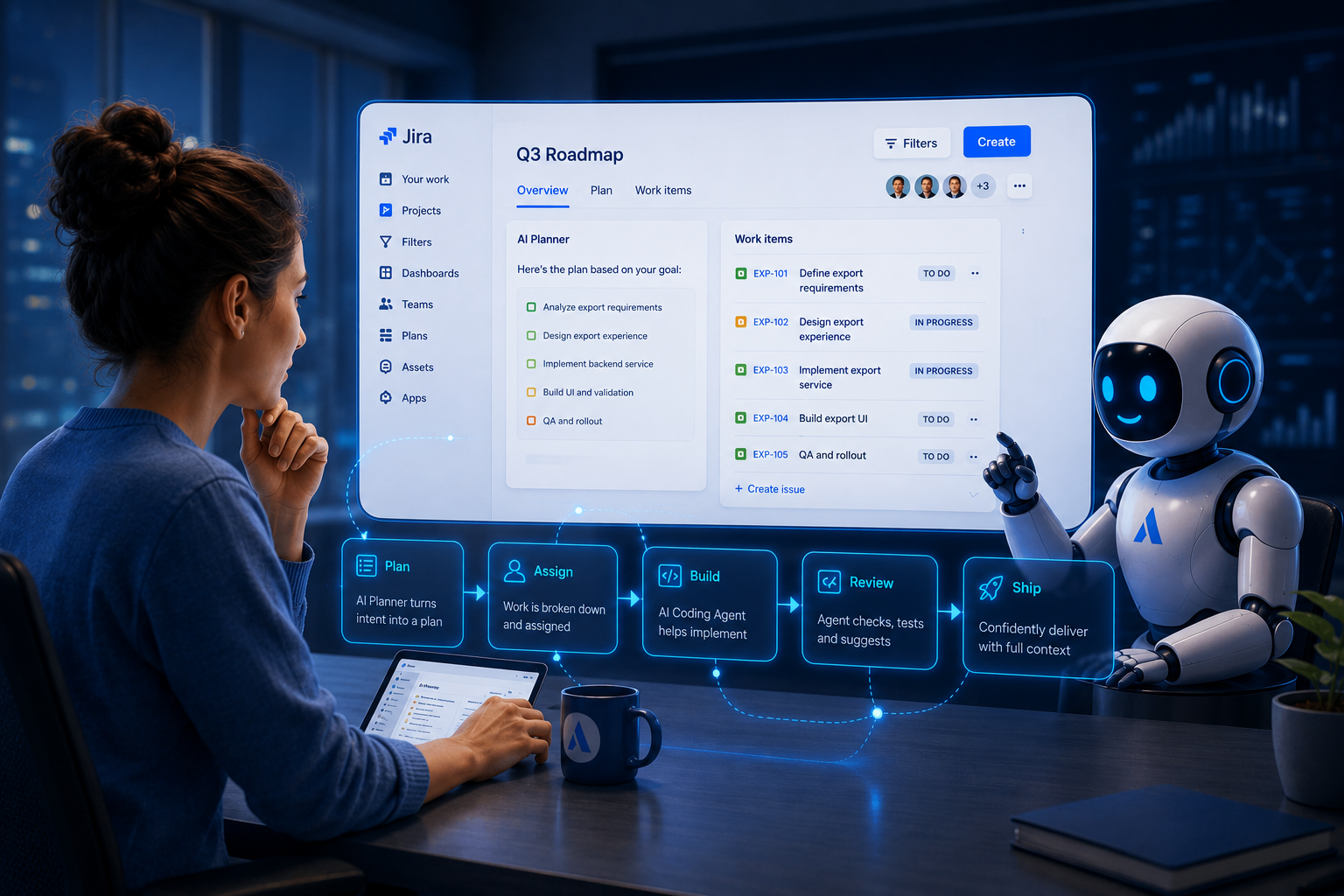
Atlassian's longitudinal study with DX paints a clear picture: across professional engineering teams, AI usage multiplied — but the expected speed gains never arrived.
The numbers describe a paradox
Atlassian's longitudinal study with DX paints a clear picture: across professional engineering teams, AI usage rose 65%, yet developer velocity gains stalled at 10–15%. Usage multiplied; output didn't grow at the same rate.
The first mistake is to blame the models. Models are, in fact, quite good at writing code. The problem is that software development has never been only about writing code. You have to turn business goals, strategy, and organizational context into working software; teams still have to decide what to build and why, understand the system they're changing and the constraints that apply, and define what "done" means. Handing an agent a prompt doesn't do that work.
The real bottleneck: context
Atlassian's diagnosis matches what we see in the field. An agent needs more than a Jira summary: the requirements, the relevant architecture, the decision history, and the constraints the team already knows. That context almost never lives in one place — tasks in Jira, requirements in Confluence, customer insight in Jira Product Discovery.
This is exactly what Atlassian's Teamwork Graph addresses: a living map connecting work, code, people, decisions, and dependencies. It lets agents understand not just the task, but the system around it.
One of the most important end-user-facing uses of the Teamwork Graph is Rovo. This is the layer that opens enterprise knowledge across Confluence and Jira to agents — through search, chat, and autonomous Rovo agents. In other words, "putting AI to work" is becoming less about choosing a model and more about building context.
What's new in Jira?
On the concrete side of the announcement, a set of capabilities stands out — each aimed at the three places agentic work typically breaks: vague plans, lossy handoffs, and output teams don't know how to trust:
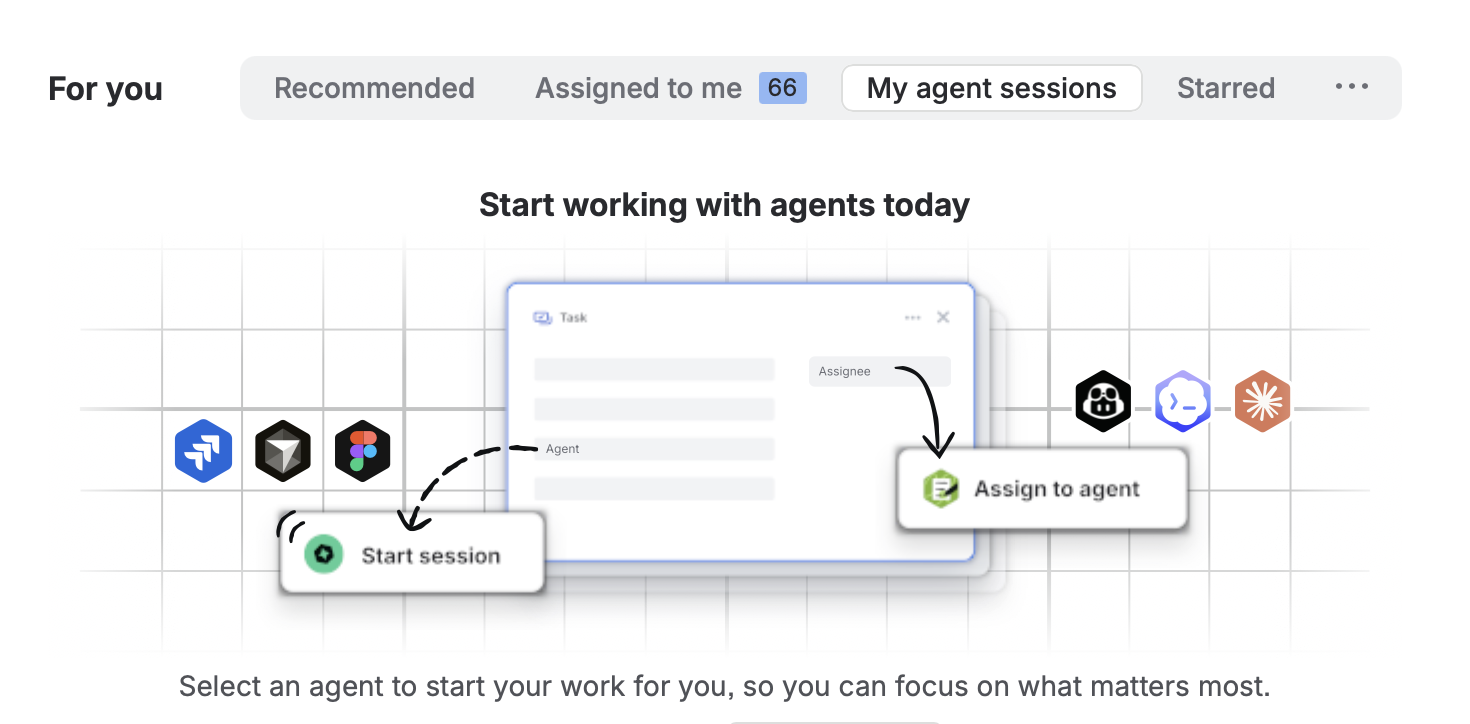
The common thread is telling: this isn't about putting more agents in more places — it's about making the agent observable, governable, and tied to a business outcome.
The detail that matters for enterprises: this runs on Cloud
The AI features highlighted in this announcement are available on the Cloud platform. Many enterprise teams still run on Data Center, and this announcement turns "when should we migrate?" from a theoretical question into a concrete competitive one. If a competitor runs agents inside Jira under governance while your agent sessions are still scattered across terminals and local machines, that gap is the productivity gap itself.
Migration here should be read not as an "IT project" but as an AI-readiness project. A well-designed Cloud transition opens the door to Teamwork Graph context, Rovo capabilities, and agentic Jira automations all at once. On the KVKK and data-governance side, observable agent sessions are an asset for auditability, not a weakness.
Turning Rovo into value is an implementation exercise
Our experience is clear: switching Rovo on is not the same as getting value from Rovo. What determines an agent's accuracy is how well the context behind it is modeled. A well-organized Confluence knowledge base, consistently structured Jira fields and workflows, the right content connected to the right agent — all of this is architecture and configuration work. The "44% more accurate" figure doesn't appear with zero effort; it appears when the context is set up properly.
At Almbase, with 9+ years in the Atlassian partner ecosystem, we address both axes together: planning your Cloud migration as an AI-readiness project, and tailoring your Rovo and Teamwork Graph setup to your organization's actual knowledge and workflows. The goal is to move agents from isolated copilots to participants working in the same SDLC — under the same governance framework — as the rest of your team.
Agents will change how software gets built. They will not remove the need for judgment, context, or accountability. The teams that get those three right are the ones that will pull ahead.
Ready for AI-native Jira?
Let's assess your organization's Cloud and Rovo readiness together — a short readiness review to clarify where to start.
Get in touchSource: Atlassian, "How we're evolving Jira for AI-native software development," July 15, 2026.